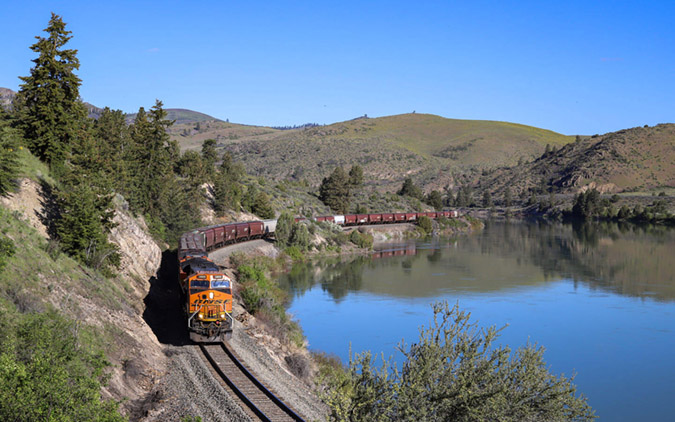
Fueling the future: How BNSF boosts fuel efficiency, lowers emissions while moving America’s freight
By STEPHEN MANNING
Staff Writer
BNSF moves vast quantities of freight to power the nation’s economy. Consumers and businesses depend on us for critical goods and supplies, like grain, refrigerated foods, lumber, plastics, vehicles, electronics, clothing, wind power components and much more.
All that movement takes great people, quality equipment, and fuel. A lot of it.
BNSF hauls the highest freight volume of any U.S. railroad, so the amount of fuel we use is greater compared to railroads that move less freight. That’s why BNSF has many initiatives in place to reduce our fuel consumption and improve our fuel efficiency along our 32,500-mile network.
"No railroad, including BNSF, wants to use one gallon more of diesel fuel than it has to," said John Lovenburg, BNSF's vice president of environment and sustainability. "That's why BNSF relentlessly pursues greater fuel efficiency. Every day, we're working to drive down fuel consumption."
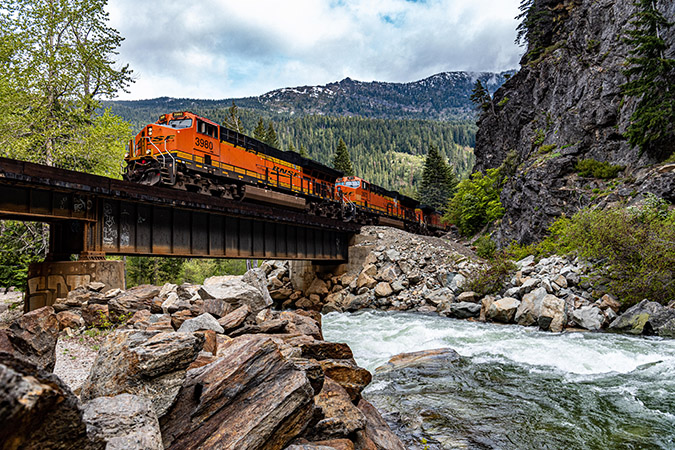
Trains are more fuel-efficient than trucks
The railroad industry, including BNSF, deploys robust fuel efficiency measures. Rail is the most efficient way to move goods on land, and on average, it’s four times more fuel efficient than trucks. Compared to shipping by truck, trains can reduce greenhouse gas emissions by up to 75 percent.
A train can move a ton of freight 500 miles on only one gallon of diesel fuel. BNSF consumed 1.15 gallons of diesel for every 1,000 gross ton miles (GTMs) moved in 2024. That’s a 13% improvement over the past 20 years, and a 28% improvement since the first full year of the Burlington Northern Santa Fe merger in 1996.
In 2024, BNSF customers avoided 24.6 million metric tons of CO2e emissions by shipping by rail instead of solely over the road. That’s like taking more than 5.7 million vehicles off the road.
If just 10 percent of the freight currently shipped by the largest trucks were moved by rail instead, annual greenhouse gas emissions would fall by nearly 20 million tons.
When pressing forward on fuel efficiency, compared to other Class I railroads, BNSF contends with several factors, including:
-
Geography: We have much steeper grades on our network in areas like the Cajon Pass in California, Marias Pass in Montana, and the Arizona Divide near Flagstaff, where trains climb to more than 7,300 feet.
-
As the premier intermodal freight provider on the continent, our freight mix is much more intermodal-heavy than other railroads. This means we operate more trains with faster expedited service speeds, with the extra speed resulting in additional fuel consumption.
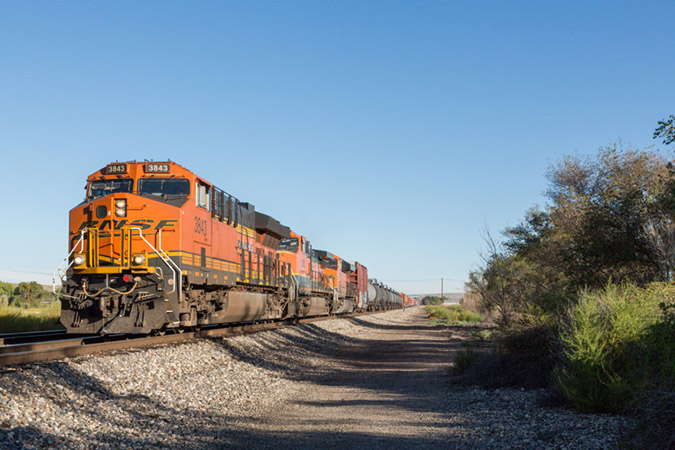
BNSF’s fuel-efficiency improvement efforts
Despite these factors, we’re focused on improving the fuel efficiency of our trains, by:
-
Improving network fluidity through funding infrastructure and technology projects that prevent train stops, while making sure we have the resources available to absorb service interruptions and recover quickly. When freight is moving through the network quickly, fuel efficiency improves.
-
Reducing horsepower per ton by optimizing the number of trailing tons of freight to match our locomotives, plus managing use of the locomotive throttle to avoid fuel consumption when it’s not needed.
-
Increasing our use of energy management systems. This involves training locomotive engineers to work with the systems, running more trains with an equipped locomotive at the lead, and increasing the miles of track on our network capable of running the systems. Energy management systems draw on data such as terrain, train weight and length, track conditions, speed restrictions and signal locations to find the most fuel-efficient way to travel a route.
-
Reducing the amount of time locomotives spend idling their engines by cutting locomotive dwell time, improving our locomotive automatic start/stop systems, and requiring manual shutdown of locomotives that shouldn’t be idling.
-
Reducing train resistance by applying to the rail surface a liquid that reduces rolling friction.
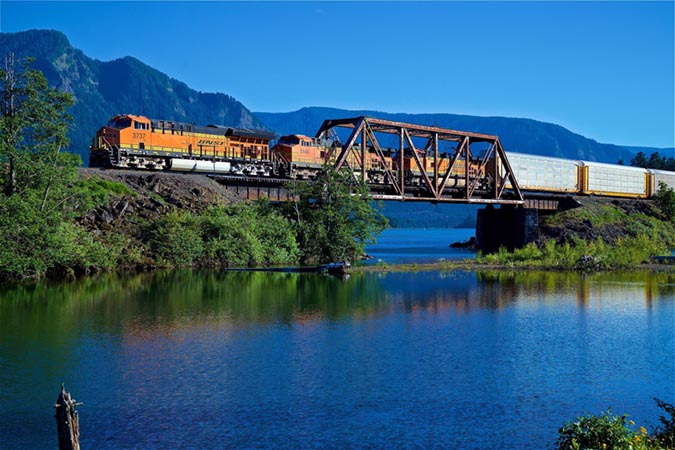
BNSF emissions improvement efforts
The other part of operating a more environmentally friendly railroad involves reducing carbon, particulate matter, and NOx fuel emissions. BNSF and other railroads are committed to science-based carbon targets. We’ve committed to reducing emissions by 30 percent by 2030, and we’re halfway there.
In addition to improving fuel efficiency (burning fewer gallons per ton-mile), we’re reducing emissions through a range of measures, including:
-
We have the most modern, cleanest fleet of locomotives in the rail industry.
-
Using more renewable diesel, which results in up to 35 percent lower particulate matter and up to 10 percent lower NOx emissions.
-
Retiring older, less sustainable locomotives.
-
Additionally, scheduled overhauls of locomotives create more fuel-efficient and cleaner burning locomotives.
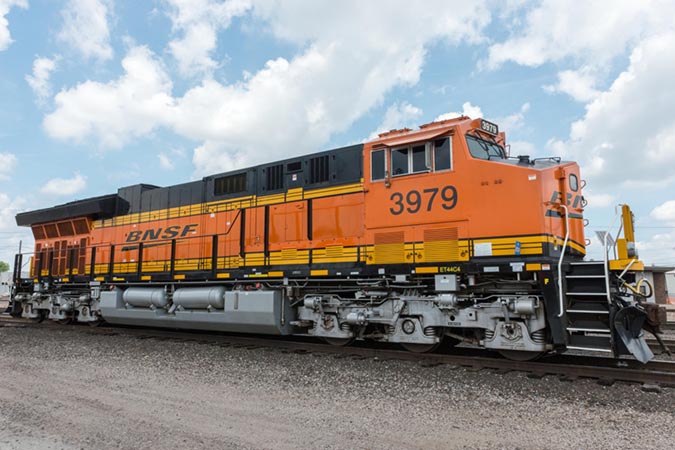
The emissions level of a locomotive is indicated by its tier. Tiers run from 0 to 4, with Tier 0 being the oldest, least stringent standard set in 2000. Tier 4 from 2015 onward covers the newest and cleanest models of locomotive, which meet the highest standards for emissions reduction.
BNSF’s fleet includes more Tier 2, 3 and 4 locomotives than other railroads, including 360 that meet the Tier 4 standard.
We’ve also been at the forefront of helping to research next-generation locomotives, and while new technologies like battery-electric locomotives are not yet ready to pull their weight in railroad operations, we’ll keep exploring the possibilities as technology advances.
“At BNSF, sustainability, efficiency and innovation are guiding stars for us,” Lovenburg said. “It’s our mission to bring added sustainability to our operations and help our customers build sustainable supply chains. Our work to reduce fuel consumption and emissions will continue to be a priority for us, and I’m proud of the strides we’ve made toward a cleaner, better tomorrow for future generations.”